Project Description
KLCC BEING THE BEST INVESTMENT LOCATION IN MALAYSIA
KL City – A historical look
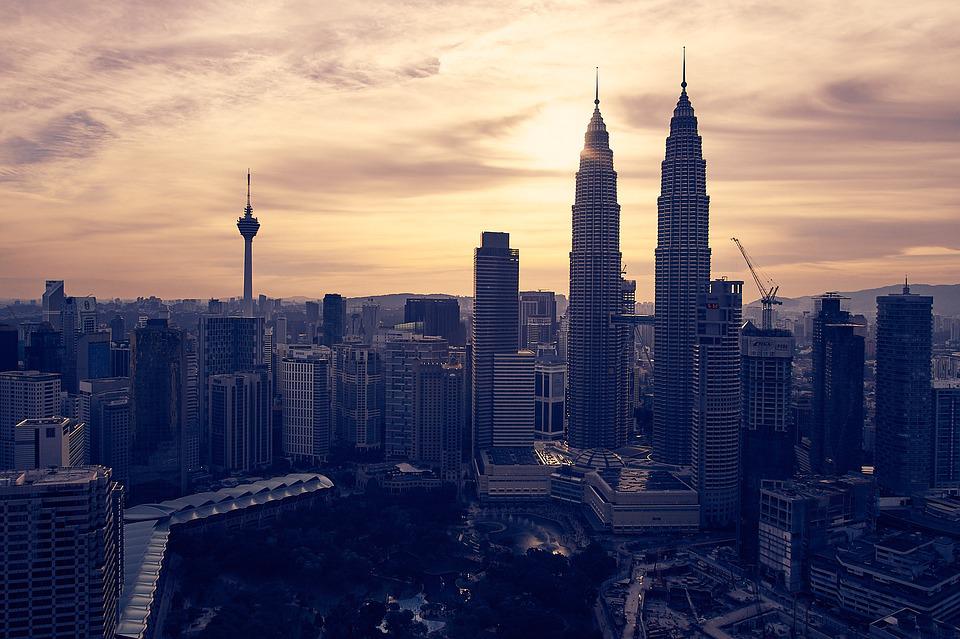
The capital of Malaysia, Kuala Lumpur, continues to forge its name and is gradually gaining recognition throughout the world. The estimated population of the KL area alone is at 1.73 million as of 2016, when you take into account the Klang Valley areas which has been touted as Greater Kuala Lumpur, the population stands at around 7.25 million as of 2017. It is without a doubt one of the fastest growing regions within Southeast Asia in both population and economic development.
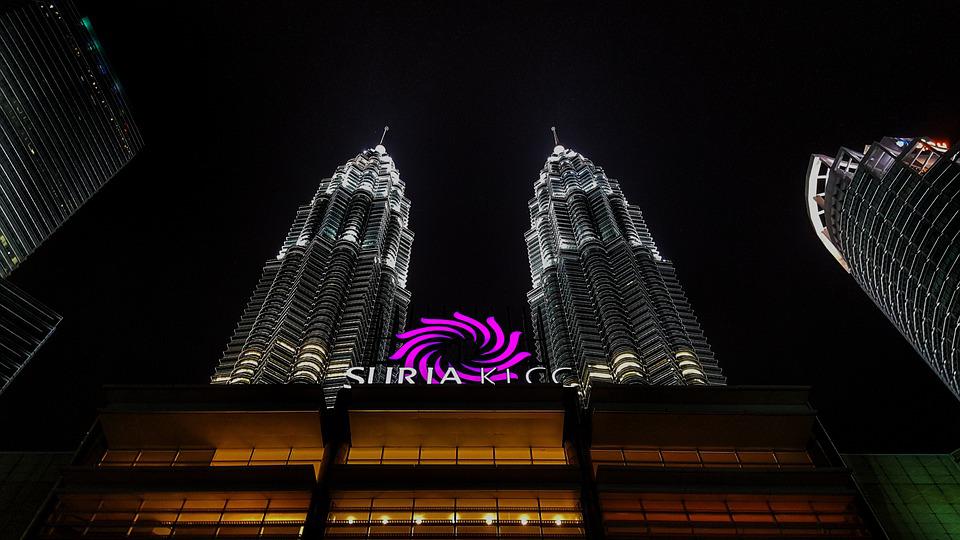
Skyscrapers emerged from the once languid colonial outpost, with the KL Tower reaching completion in 1995 and the Petronas Twin Towers emerge in the year 1998, becoming the tallest building in the world until 2004. The two buildings have since become the landmark of Kuala Lumpur, an area vital to the formation of the Golden Triangle region of the city today. Riding through a couple of financial and economic meltdown, the city has become one of the liveliest city in Southeast Asia. Throughout the years, the city has hosted many international sporting, political and cultural events including the 1998 Commonwealth Games as well as the Formula One Grand Prix.
The Modern Kuala Lumpur
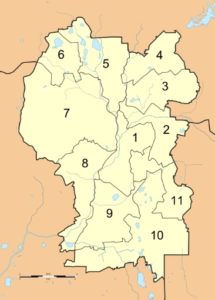
Kuala Lumpur can be divided into eleven districts, as can be seen in the picture.
- Bukit Bintang
- Titiwangsa
- Setiawangsa
- Wangsa Maju
- Batu Caves
- Kepong
- Segambut
- Lembah Pantai
- Seputeh
- Bandar Tun Razak
- Cheras
Over the years, Kuala Lumpur has grown remarkably especially within the Golden Triangle Area that covers the area north of Jalan Pudu, south of Jalan Ampang, west of Jalan Imbi and Jalan Tun Razak. Many five-star hotels, top class luxury shopping malls, Grade A office towers and entertainment districts are located within this region. Unfortunately due to the high concentration of people and a lack of public transport (Only 2 LRT lines were built within the city), the area is plagued with traffic congestion as the public transport system in KL is archaic.
Despite the dreadful traffic condition, KL continued to thrive and grow, with land and property value increasing steadily. Developers building luxurious high rise condominiums, serviced residences all around KL and as the land in the center of KL is limited, the developments as well as the population has overflowed into the suburban areas and districts.
Population and Growth
Kuala Lumpur is the busiest and most populous city in Malaysia, with a population density of 6,696 inhabitants per km2. Apart from the high density, since KL is the economic and cultural center of Malaysia, it is inevitable that it attracts talents and professionals all over the country, with a heterogeneous population that not only includes the 3 main ethnic groups (Malay, Chinese, Indian), there is also a good mix of different cultures such as the Eurasians and the Kadazans, Ibans and other indigenous races from various states in Malaysia. Additionally, there is an increasing amount of foreign workers staying in KL.
Most important of all, according to data from the Department of Statistics Malaysia, the population growth rate of the Federal Territory of KL is around 1% whereas the growth rate for Selangor state (includes most parts of Klang Valley) is around 2%. This indicates that the entire region is still constantly growing.
The growing population is good news for the property market as new developments are still constantly emerging despite the slowdown in the economy. As the centre of business and economy, KL is most attractive to the younger generation which, in a few years’ time will be looking to purchase or invest in the property market. This means that the demand will still be there and as such, the potential for growth in this area is high. It goes without saying that the Golden Triangle area that possess multiple amenities and facilities that attracts youngsters will be far more attractive than less convenient and lively fringe areas.
 As can be seen in the above graph, the property price of Kuala Lumpur has increased steadily through the years and the increment is significantly higher than that of other major cities within Malaysia. The stability of the property value of within the vicinity of Kuala Lumpur is most significant during the economic slowdown since 2014.
When the property value of various state slowed, KL maintained its steady increase, further consolidating its position as the best place for property investment in Malaysia. This is because of its stature as the city center of Malaysia. You may also consider another overlooked prime location in Kuala Lumpur within Sentul and Setapak.
Public Transport
 The lack of public transport in Malaysia has always been a problem, and through the years, the people of Malaysia have developed the habit of getting a driver’s license and owning a car as soon as they can. This lead to the massive development of road and expressways, improving the connectivity of various locations through the construction and widening of roads. It is only recently that the government announced the Greater KL Land Public Transport Master Plan, finally focusing on public transport as a way of mitigating the congestion within the city.
The increased number of public transport and the increased range of coverage will undoubtedly improve the prospects of the entire KL region. The planned MRT lines will connect the fringe areas of KL as well as some areas in Selangor with the city centre, increasing the property value and development prospects of those connected areas. However, one must be realistic and realise that it will take time for these planned developments to be implemented and even will take even longer to complete. In the meantime, one of the transport problem of the city has been solved by technology innovations such as Uber and Grab. Transportation is definitely one of the key consideration in buying property for investments.
Projects
 With the improved connectivity across the Greater Kuala Lumpur region, more and more mid-range developments have been moved to areas further away from the Golden Triangle region and city center, leaving the luxurious and high-end property developments remaining within the vicinity of the central KL region.
Apart from the Petronas Twin Towers and KL Tower, the central Kuala Lumpur is filled with other luxurious developments. In terms of shopping malls, there is the famous Berjaya Times Square along Jalan Imbi, Fahrenheit 88, Starhill Gallery, Pavilion, Sungei Wang Plaza, and Lot 10 along Jalan Bukit Bintang as well as Suria KLCC located just beneath the Petronas Twin Towers.
The number of five-star hotels is astonishing as well, including Four Seasons Hotel, Ritz-Carlton Hotel, St. Regis Hotel, JW Marriot Hotel, Shangri-La Hotel and more. In terms of new development, there is the W-Hotel managed by Starwoods under construction just beside the Petronas Twin Towers and the prestigious 8 Conlay serviced residence, bringing world class service into the KL city.
Conclusion
In summary, it can be seen from the above that the central region of Kuala Lumpur has become a luxurious business district and the trend will only continue. This trend, paired with the dreadful traffic situation in the city has caused the locals to move out of staying in this area. The properties in the golden triangle region has become properties built for investors in mind. The properties are built fully furnished, with special and luxurious features that is specifically designed to attract buyers. Many of these properties are bought and rented to expatriates working in the city centre. This is also why there is an increasing number of serviced residence being constructed, with high quality maintenance provided, the likelihood of the property beating out on its competition. Check out for more location analysis in genting highland and prospect of property investment there.